Contact us
 Customer Area


 Visit LWS
Rate this article :
This article was useful to you ?
 Yes
Yes
 No
No
 Article read
15059 once
Article read
15059 once Merci ! N'hésitez pas à
poser des questions sur nos documentations si vous souhaitez plus d'informations et nous aider à les
améliorer.
Merci ! N'hésitez pas à
poser des questions sur nos documentations si vous souhaitez plus d'informations et nous aider à les
améliorer.Vous avez noté 0 étoile(s)



Sommaire
Procédure
The WP Manager snapshot is added to the automatic backups included with your hosting plan. Read the full policy to understand which backups are kept by default.
When working on your WordPress website, you may encounter some inconveniences such as unwanted replacement or deletion of data. To avoid any problem, WP Manager offers you [PERSON_NAME] instant backup (snapshot) of your site that you can restore at any time if you need it.
In this section, we will explain how to create a snapshot of your WordPress site. A snapshot is a temporary backup that you can make at any time and restore if you ever need it.
First, you must log in to your LWS account and access the shared hosting where [PERSON_NAME] WordPress site is located.
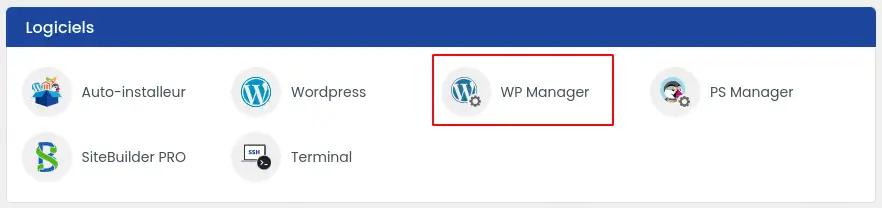
Then click on "WP Manager" located in the "Software" section of your web hosting.
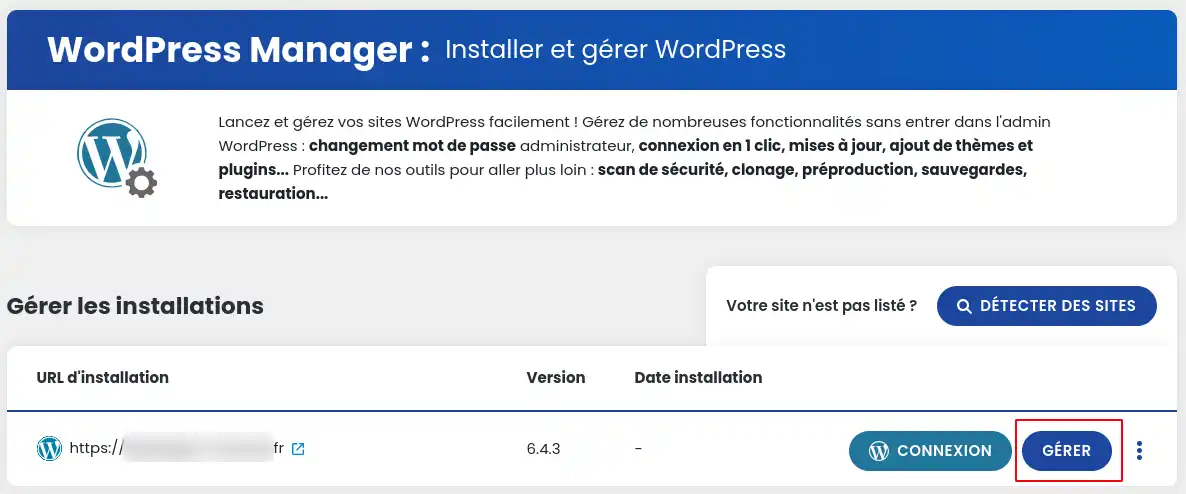
Then click on the "Manage" button for the site you want to back up.
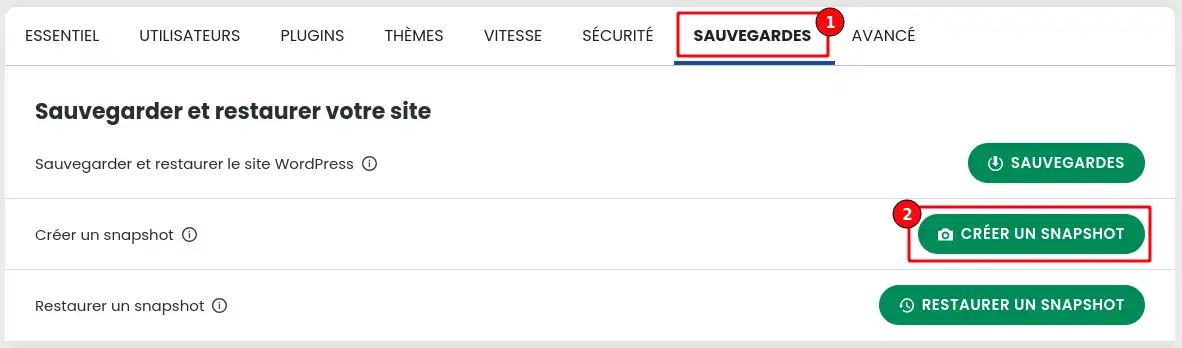
Once in your WordPress site Manager, click on the "Backups" tab then on the "Create a Snapshot" button.
A window opens where you have the option to create a backup of web files only, [ADDRESS] data only or both. You can also add a short description that will make it easier to find the Snapshot to restore if you need it.
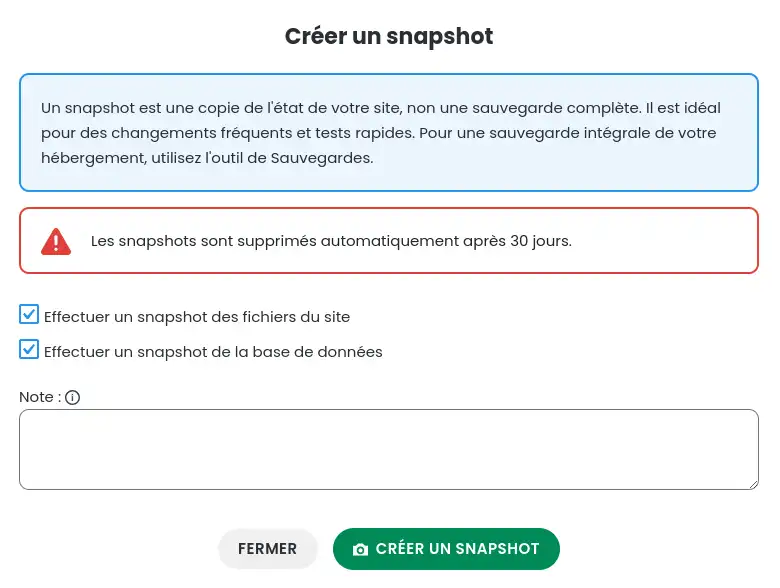
Snapshots are automatically destroyed 30 days after their creation. Their use can therefore only be temporary.
After showing you how to create a snapshot, we will show you how to restore it if needed.
First, you must log in to your LWS account and access the shared hosting where [PERSON_NAME] WordPress site is located.
Then click on "WP Manager" located in the "Software" section of your web hosting.
Then click on the "Manage" button for the site you want to restore.
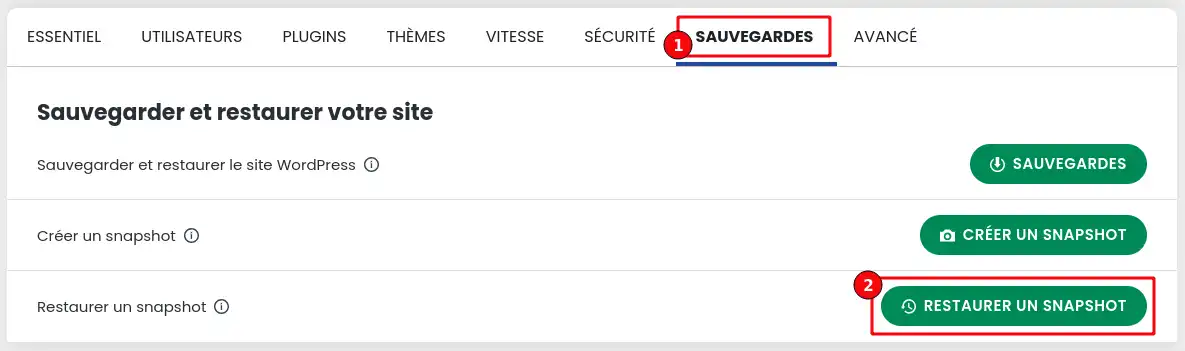
Once in your WordPress site Manager, click on the "Backups" tab then on the "Restore a Snapshot" button.
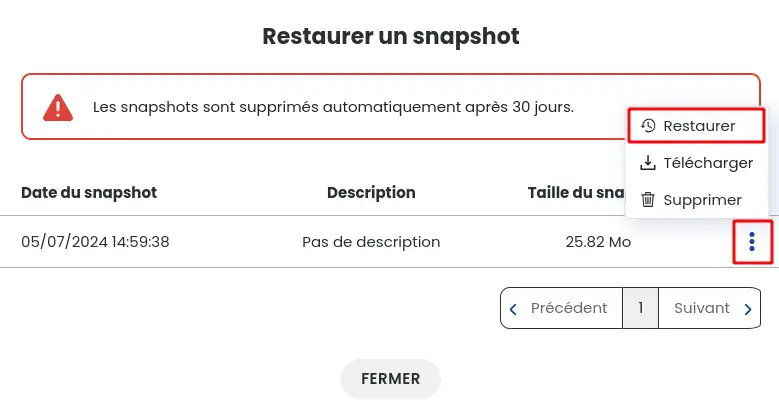
A window opens where you have the option to restore a previously created snapshot. To do this, you must first click on the icon with the three dots (1) of the snapshot you want to restore, [PERSON_NAME]Restore".
You now know how to:
Whether you are looking to prevent data loss or restore your site after an incident, these essential steps give you peace of mind and control over your online content. Don’t forget that snapshots are short-lived and that it is wise to create them regularly 👍.
[PERSON_NAME] article to the end! [PERSON_NAME] questions or if you would like to share your experience with WP Manager, feel free to leave a [PERSON_NAME]. Your feedback is valuable and can help the whole community! 😊
Rate this article :
This article was useful to you ?
Yes
No
1mn reading
How do I search for Wordpress installations on my hosting?
1mn reading
How do I manage Wordpress users with WP Manager?
1mn reading
How do I manage updates to my Wordpress site using WP Manager?
1mn reading
How do I manage extensions and plugins with WP Manager?
 About LWS :
LWS is a 100% French web hosting company that focuses on quality and innovation and offers a responsive and competent technical service at affordable prices.
About LWS :
LWS is a 100% French web hosting company that focuses on quality and innovation and offers a responsive and competent technical service at affordable prices.